

This 14-day journey across India traces a rich cultural arc from the historic heart of Delhi to the sunlit shores of Goa, weaving together royal heritage, living traditions, and everyday life. The itinerary moves through the Mughal landmarks of Delhi and Agra, including the Taj Mahal, continues into the regal landscapes of Rajasthan in Jaipur, and then shifts west to Gujarat, where Gandhi’s legacy in Ahmedabad meets the stark beauty and vibrant tribal culture of the Rann of Kutch. From artisan villages and desert sunsets, the route flows into the dynamic energy of Mumbai, with its colonial architecture, street food, and island temples, before slowing down in Goa amid beaches, churches, spice plantations, and coastal sunsets. Throughout the trip, guests experience local cuisine, crafts, music, and rituals, creating a balanced blend of history, culture, nature, and relaxed coastal time.
Itinerary
Upon arrival at the airport by flight, you will be greeted by your representative & welcomed by Mauli.
Welcome by Mauli is a sacred red thread used in Hindu rituals, such as puja (prayers) and havan (fire ceremonies). It symbolizes spiritual protection, guarding the wearer against negative energies and worldly troubles. Tied around the wrist, it is believed to invoke blessings from the deity being worshipped, offering peace, prosperity, and good health. The red color represents vitality, strength, and divine energy. The Mauli serves as a constant reminder of one’s connection to the divine and encourages virtuous living. It is seen as a shield that keeps the wearer under divine protection, ensuring their well-being and harmony.
Transfer to the hotel and check-in (rooms will be available from 2:00 PM)
Delhi, the capital of India, is a vibrant metropolis that blends rich history with modern development. Home to the country’s central government, Delhi is the political and administrative heart of India. With its diverse cuisine, bustling markets, and heritage sites, Delhi represents the perfect fusion of tradition and contemporary urban life.
Breakfast at the hotel.
Introduction to Hindi: Learn a few Hindi words with your guide, which will not only help you better understand the locals, but also communicate more easily with them. This little bit of language knowledge will facilitate your exchanges, allow you to create more authentic connections and enrich your cultural experience during your trip.
Optional: Discover Delhi’s street food: Discover other cultures of India in the footsteps of Delhi through food and your taste buds. An unknown experience that takes you away from the mainstream of Delhi. The activity is unique because, through flavours, you will be able to understand the history and culture of migrants from the north-east. The activity is designed to allow you to taste food and culture that are hidden from the general public. The activity focuses on storytelling through food and ingredients, allowing you to enjoy an eventful experience. The streets of Delhi are entirely dedicated to food. We have therefore selected a few good local places that are safe and delicious for explorers of taste.
Delhi has a population of around 20 million, clearly divided between the old and new cities. NEW DELHI has a few large open spaces, while OLD DELHI is characterised by its small, bustling streets. You will explore OLD DELHI, passing through the RED FORT and entering the main shopping street, Chandni Chowk, which is always bustling with activity. Enjoy a rickshaw ride and see some of the best shops selling silver jewellery, handicrafts and sweets. This place is bustling with people day and night. Later, visit Jama Masjid, the largest mosque on the Indian subcontinent.
Don’t miss out, taste the magic of Jalebi! : The South Asian variety is made by frying a dough made from maida flour (plain flour or all-purpose flour), shaped into pretzel shapes or circular spirals. Once golden and crispy, these shapes are then dipped in a fragrant sugar syrup, giving them a crunchy texture on the outside and a soft texture on the inside, as well as a deliciously sweet taste.
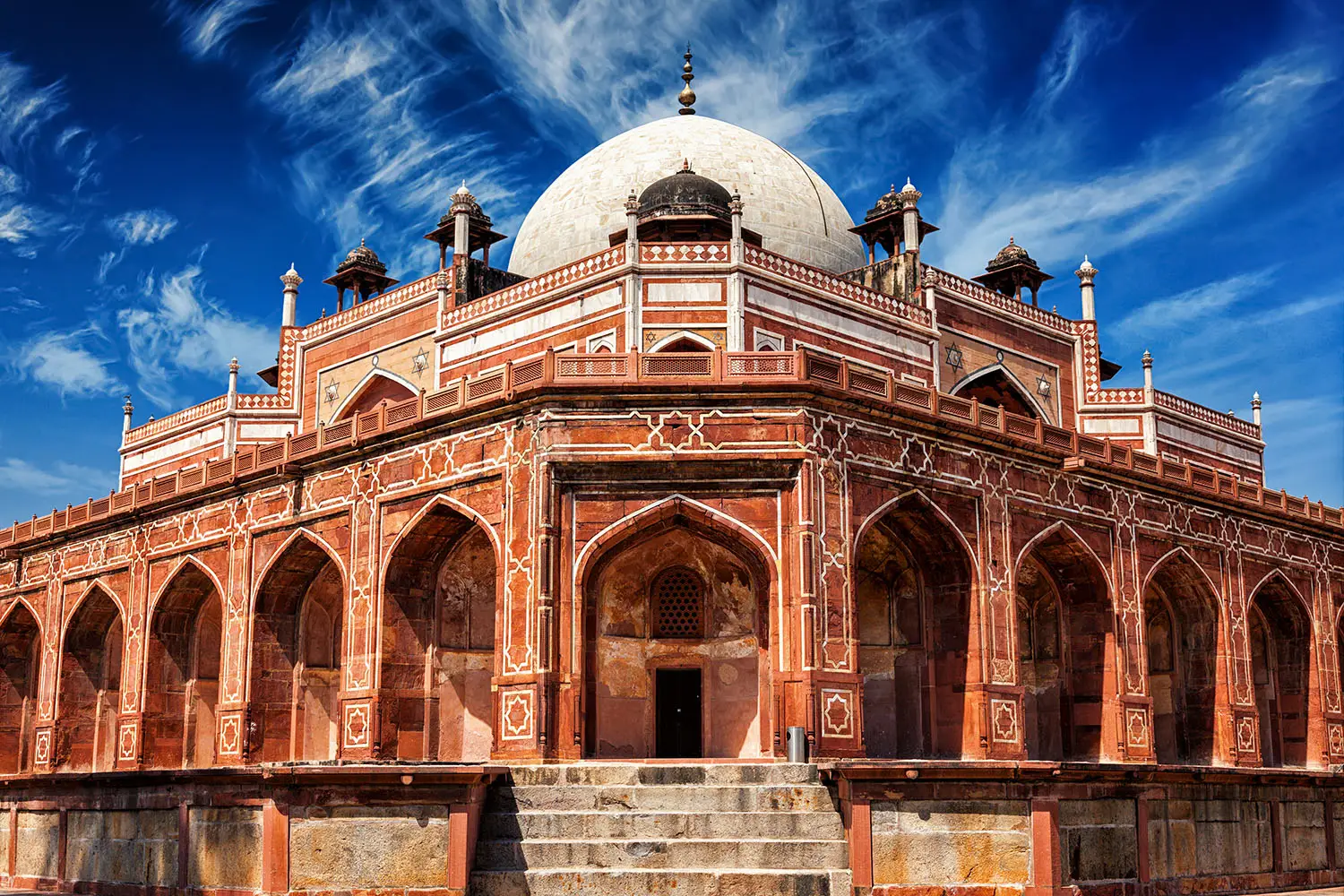
Then visit Raj Ghat and discover the enchanting Humayun tomb, surrounded by lush gardens and built in memory of the Mughal emperor Humayun by his devoted wife. Pass by India Gate, the Parliament building and the President’s House.
Return to the hotel & overnight.
Breakfast at the hotel.
Departure for Agra, discover the timeless beauty of Agra, home to the iconic Taj Mahal, a UNESCO World Heritage Site and one of the Seven Wonders of the World. This exclusive tourist program offers an unforgettable journey through the city’s rich history, stunning architecture, and vibrant culture.
On arrival check-in at your hotel.
Later on, visit the Red Fort, whose military power cannot be doubted. It was the residence of the Mughal emperors. Everyone has left their mark, Akbar and Jahangir with red sandstone, Shah Jahan with white marble. The fort stands on the banks of the Yamuna, surrounded by a wall 20 to 33 metres high and 2,500 metres long.
In evening visit to the famous Taj Mahal (closed on Fridays) at sunset. It was built by the Mughal emperor Shah Jahan in memory of his beloved wife Mumtaz Mahal. The construction of this magnificent mausoleum dedicated to love was completed in 22 years. After spending a few unforgettable hours, return to the hotel .
Visiting a Petha shop in Agra is a delightful experience.
Petha is a famous sweet treat originating from the city and holds a special place in its culinary heritage. The main ingredient in Petha is the ash gourd, which is peeled, deseeded, and cut into pieces. A visit to a Petha shop in Agra promises a sweet and memorable experience, allowing you to indulge in one of the city’s most beloved culinary treasures. Whether you’re a local or a visitor, sampling different varieties of Petha is an activity not to be missed in Agra.
Return to the hotel.
In the evening, you will attend a magic show (private).
Overnight stay at the hotel.
Breakfast at the hotel.
Drive to Jaipur, stopping en route at the magnificent, fortified ghost town of Fatehpur Sikri, near Agra. Founded in 1571 by the Mughal Emperor Akbar, this ancient city once served as the capital of the Mughal Empire. Built in honour of the revered Sufi saint Salim Chishti, Fatehpur Sikri showcases an extraordinary blend of Persian, Islamic, and Indian architectural styles. Its grand palaces, courtyards, mosques, and gateways reflect the opulence and vision of Akbar’s reign. The Buland Darwaza, towering gateway to the complex, and the serene Jama Masjid are among its most celebrated monuments. Despite its splendour, largely due to an inadequate water supply. Today, Fatehpur Sikri stands as a UNESCO World Heritage Site, preserving the grandeur of Mughal artistry and offering visitors a glimpse into India’s rich imperial history on the journey from Agra to Jaipur. Continue to Jaipur.
Jaipur, the vibrant capital of Rajasthan, is famously known as the “Pink City” due to the distinctive pink hue that adorns the buildings in its old quarter. This colour was originally chosen in 1876 to welcome the visit of Prince Albert and has since become a symbol of Jaipur’s warm hospitality. Founded in 1727 by Maharaja Sawai Jai Singh II, the city was one of India’s first planned capitals, designed according to ancient Hindu architectural principles. Set on the bed of a dried-up lake amid an arid landscape, Jaipur is encircled by rugged hills crowned with imposing fortresses and crenellated ramparts that guard its historic charm.
Transfer to the hotel.
Optional : Enjoy a cooking demonstration and dinner with a local family: Experience the heart of Jaipur by joining a local family for an interactive cooking demonstration and traditional meal. In their welcoming home, watch as they skillfully prepare authentic Rajasthani dishes using age-old recipes, fresh local ingredients, and aromatic spices. Learn the secrets behind specialties such as dal baati churma, gatte ki sabzi, and laal maas, while listening to stories of Jaipur’s rich culinary and cultural heritage. Afterward, sit down together to savor the delicious meal, sharing laughter, traditions, and the warm hospitality that defines life in Jaipur.
Overnight stay at the hotel.
Breakfast at the hotel.
Visit the splendid Amber Fort, majestically overlooking a serene lake and surrounded by rugged hills. Built in pale yellow and pink sandstone, this magnificent structure showcases a perfect fusion of Mughal and Rajput architectural styles. Ascend to the top of its impressive ramparts by Jeep (subject to availability) and enjoy breathtaking panoramic views of the landscape below. Inside the fort, explore its graceful courtyards, mirrored halls, and beautifully decorated chambers that reflect the grandeur of Rajasthan’s royal past. Each morning, a religious ceremony takes place in the sacred Kal Temple, filling the palace with a tranquil and spiritual atmosphere.
Optional: Walk on water at Nahargarh: During this 2-hour guided tour, you will discover ancient hydraulic structures – canals, Roman aqueducts, step wells, storage reservoirs – and learn about their function, architecture and history. You will discover ancient hydraulic structures – canals, Roman aqueducts, step wells, storage reservoirs – and learn about their function, architecture and history. The tour is peppered with facts, anecdotes and stories that make the experience fun and entertaining. |
OR
Optional: The Elephantine Experience: Meeting elephants in their natural habitat is an unforgettable experience. Vedic Walks offers a responsible way to spend time with these gentle giants, without riding them. Stroll around the village, between the Aravali Mountains and the watering hole, visit their shelter, share a moment with their keepers and offer them bananas. Learn their body language, rub them down, cook for them… A wonderful way to create an authentic bond while supporting animal-friendly tourism. |
In the afternoon, take a walk through the lively “Pink City“. In the streets, cows, elephants, bicycles and taxis meet amid a cacophony of horns. You will pass by the famous Hawa Mahal (House of Wind), and later visit the City Palace and the Jantar Mantar observatory.
Take an electric rickshaw ride through Jaipur’s old market. Jaipur’s bazaars are legendary. In 1729, Maharaja Sawai Jai Singh II sent letters to famous trading houses throughout India, inviting them to settle in Jaipur. They were given prime locations, free land and tax concessions. Located on important trade routes, Jaipur quickly became a major centre for trade and commerce, home to a large number of artisans and merchants.
Discover the traditional art of clothing in Rajasthan!
Discover how a typical Rajasthani turban, brightly coloured and decorated with intricate patterns, is carefully knotted for men. This colourful headdress, called a pagdi or safa, is much more than just a piece of cloth: it is a symbol of honour and pride, worn especially at weddings, festivals and special ceremonies. Admire the grace with which the sari is draped around women. This timeless garment consists of a long, flowing piece of fabric, usually measuring between 6 and 9 metres. Drape elegantly around the body, the sari transforms into a magnificent outfit that highlights both tradition and personal style.
A Bollywood movie night follows at RAJ Mandir, Rajasthan’s largest cinema with a capacity of 2,500 seats, complete with small waiting rooms, a bar and a very chic decor. Even if you don’t understand Hindi, this experience will leave you amazed. Bollywood is part of the Indian way of life and practically the only entertainment for the majority of India’s population.
Return to the hotel.
Overnight stay at the hotel.
Optional: 1-hour yoga session: Yoga is an ancient practice from India that harmonizes the mind, body, and spirit through movement, breath, and mindfulness. It offers gentle stretches, guided postures, and relaxation techniques to promote flexibility, focus, and inner calm. Suitable for all experience levels, the session provides modifications to ensure comfort and accessibility. Regular yoga practice supports both physical and mental well-being, helping reduce stress and restore balance. Participants are encouraged to wear comfortable clothing and bring a mat or towel. No experience is required—just a willingness to relax, breathe deeply, and reconnect with yourself. |
Breakfast at hotel and later on transfer to airport to board flight for Ahmedabad.
Ahmedabad, Gujarat’s largest and most vibrant city, effortlessly blends centuries of history with a lively modern spirit. Founded in 1411 by Sultan Ahmad Shah, the city retains the charm of its old walled quarters—narrow lanes lined with exquisite havelis, ornate temples, and bustling pols—while the newer districts showcase broad avenues, contemporary cafes, and world-class institutions.
On arrival in Ahmedabad, check in to your hotel and take some time to rest and refresh after the drive.
As the sun starts to dip, you step out to experience Ahmedabad’s evening charm. Your first stop is the Sabarmati Riverfront, a beautifully designed promenade along the Sabarmati River. The atmosphere is lively yet serene, with families strolling, cyclists passing by, and the gentle evening light reflecting on the water. The air is cooler and carries the scent of the riverside gardens. You may walk across to the Atal Bridge, which lights up spectacularly after sunset, creating a colourful architectural highlight against the evening sky.
From here, you continue to Manek Chowk, the iconic late-evening food market that transforms into a bustling open-air restaurant every night. Aromas of butter-laden pav bhaji, sizzling dosas, fresh jalebi and chilled kulfi fill the air. This is Ahmedabad at its most vibrant—casual, flavourful, and full of life. After enjoying the food and energy of this famous market, you return to your hotel for the night.
Overnight stay at the hotel.
Breakfast at hotel.
Morning city tour of Ahmedabad:
Sabarmati Ashram – Gandhi’s residence: The morning begins with a visit to Sabarmati Ashram, the peaceful riverside retreat where Mahatma Gandhi lived for many years and where the core of his freedom movement took shape. Walking through Hriday Kunj, his simple home, you see his cherished charkha and handwritten notes. The atmosphere remains quiet and meditative, preserving the spirit of his life and teachings.
Adalaj Stepwell – iconic 15th-century stepwell :
You continue to Adalaj Stepwell, one of Gujarat’s most extraordinary architectural creations. As you descend into the multi-storey stepwell, the temperature cools noticeably. The carved pillars, ornate balconies, and stone filigree motifs reveal a blend of Hindu and Islamic styles. Light filters beautifully through the openings, creating patterns across the stone corridors—a photographer’s delight and a window into 15th-century engineering.
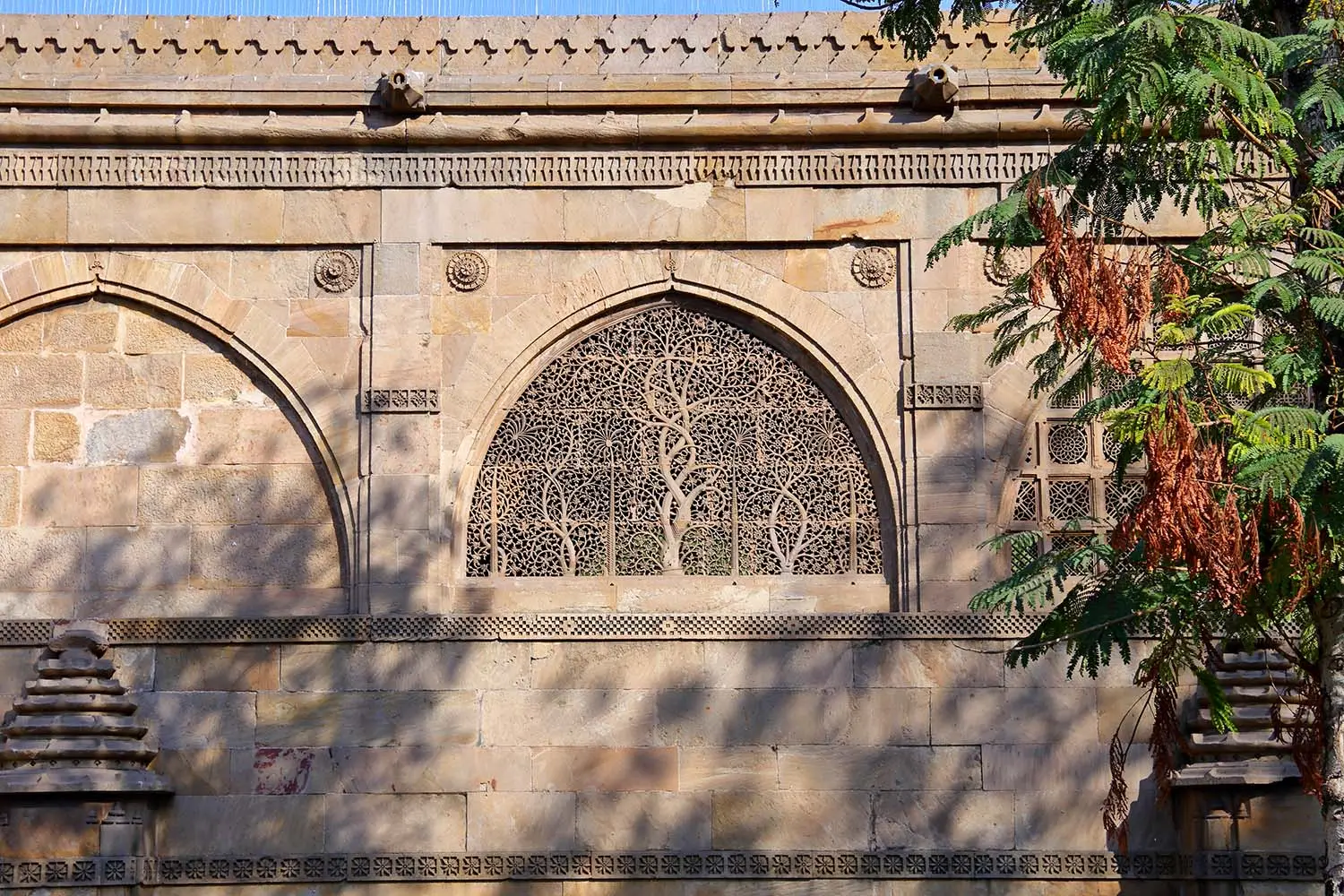
Sidi Saiyyed Mosque – famous for stone lattice window “Tree of Life”: Your next stop is the Sidi Saiyyed Mosque, famous worldwide for its intricately carved stone lattice window known as the “Tree of Life.” This masterpiece of craftsmanship has become an emblem of Ahmedabad’s heritage.
Drive to Bhuj, the landscape slowly changes into the semi-arid region of Kutch, with sparse vegetation, wide open skies, and villages scattered across the dry terrain. By evening, you arrive the Rann Utsav Tent City. A traditional Kutchi welcome awaits you, and after check-in into your luxury tent.
You have some leisure time to explore the cultural courtyard, local craft stalls, and festive ambience before dinner. Live folk music fills the evening, setting the tone for your Rann Utsav experience.
Overnight stay at tent.
Before dawn breaks, you set out for the White Desert to witness one of the most surreal sunrises in India. As the first light touches the endless stretch of salt flats, the ground seems to glow in soft shades of silver and pink. The vast stillness of the desert, combined with the changing sky, creates a moment that feels almost otherworldly. After taking in this spectacular view and capturing photographs, you return to Tent City for breakfast.
Later in the morning, you travel to Hodka and Ludiya, two colourful artisan villages. Hodka is known for its leatherwork, brilliant mirror-embroidered textiles, and traditional circular mud houses called Bhungas, decorated with murals and mirror work. Meeting the local families gives you an insight into the generational craftsmanship that defines this region. In Ludiya, home to the Meghwal community, you see women working on vivid embroidery while the men craft wooden toys and lacquered items. The bright, decorated Bhungas, the villagers’ vibrant attire, and the handcrafted art pieces together create a vivid picture of Kutch’s cultural richness.
Return to Tent City for lunch, followed by leisure time in the afternoon. You may relax at your tent.
Towards evening, you once again head to the White Desert, this time to witness the sunset. As the sun lowers into the horizon, the salt desert reflects its changing colours—golden, amber, deep orange—before the sky turns blue and purple. A camel cart ride adds a traditional touch to the experience.
Back at the Tent City, the night comes alive with folk dances, Garba performances, and soulful music under the starlit sky.
Dinner is served, and the festive atmosphere continues late into the night.
After breakfast, you drive towards Kala Dungar, or the Black Hill, the highest point in Kutch. From the hilltop, the views stretch endlessly across the Great Rann. On a clear day, the shimmering white expanse meets the horizon in a continuous line. The hill also houses a centuries-old Dattatreya Temple, adding a spiritual element to the excursion. The cool breeze and panoramic vistas make this a peaceful and refreshing morning.
On your way back, you continue to Bhuj or Bhujodi, the region’s vibrant textile and handicraft hub. Here, traditional looms are operated by local craftsmen who create shawls, stoles, Ajrakh block-printed fabrics, tie-dye textiles, and embroidered garments. You may visit artisan homes, watch the weaving process, and browse craft collections directly from the makers. Bhuj’s markets offer everything from silver jewellery to handmade pottery and souvenirs that reflect the rich artistry of the Kutch region.
After exploring the markets and having a local lunch—perhaps a flavorful Kutchi thali—you return to Tent City in the evening. The final night at Rann Utsav is a relaxed one, giving you more time to enjoy the festive ambience, performances, and cuisine before you retire to your tent.
Overnight stay at tent.
Breakfast at tent.
Transfer to Cochin airport in time to catch the flight to Mumbai.
Mumbai is India’s largest port, its commercial and industrial hub, as well as the fashion capital and the heart of Bollywood (India’s thriving film industry). Mumbai is an endlessly fascinating, if intimidating at first, hive of activity. A veritable melting pot of cultures from all parts of the country, Mumbai embodies a bit of all the diverse Indian traditions rolled into one.
On arrival at Mumbai airport, meet the representative and transfer to the hotel.
In the evening, you will enjoy a street food tour in Mumbai. Discover Mumbai (Bombay) through its cuisine on this evening walking tour. Your local expert guide shares the diverse culinary delights prepared at the bustling city’s modest street stalls, which aren’t easy to select without an insider’s know-how. During your tour, you’ll taste some of Mumbai’s favorite snacks, desserts and drinks and learn about key elements of Indian cuisine.
Return to the hotel.
Overnight stay at the hotel.
Breakfast at the hotel.
Next, a ferry ride across the port from India Gate takes you to the World Heritage-listed Elephanta Caves (closed Monday), located 9 km from Mumbai. The rock-cut temple complex covers an area of 60,000 square feet (5,600 m2) consisting of a main chamber, 2 side chambers, courtyards and subsidiary shrines. The site of these magnificent caves contains magnificent reliefs, sculptures and a temple dedicated to the Hindu god Śiva. The caves are carved into solid rock. The temple complex is said to be the abode of Shiva.
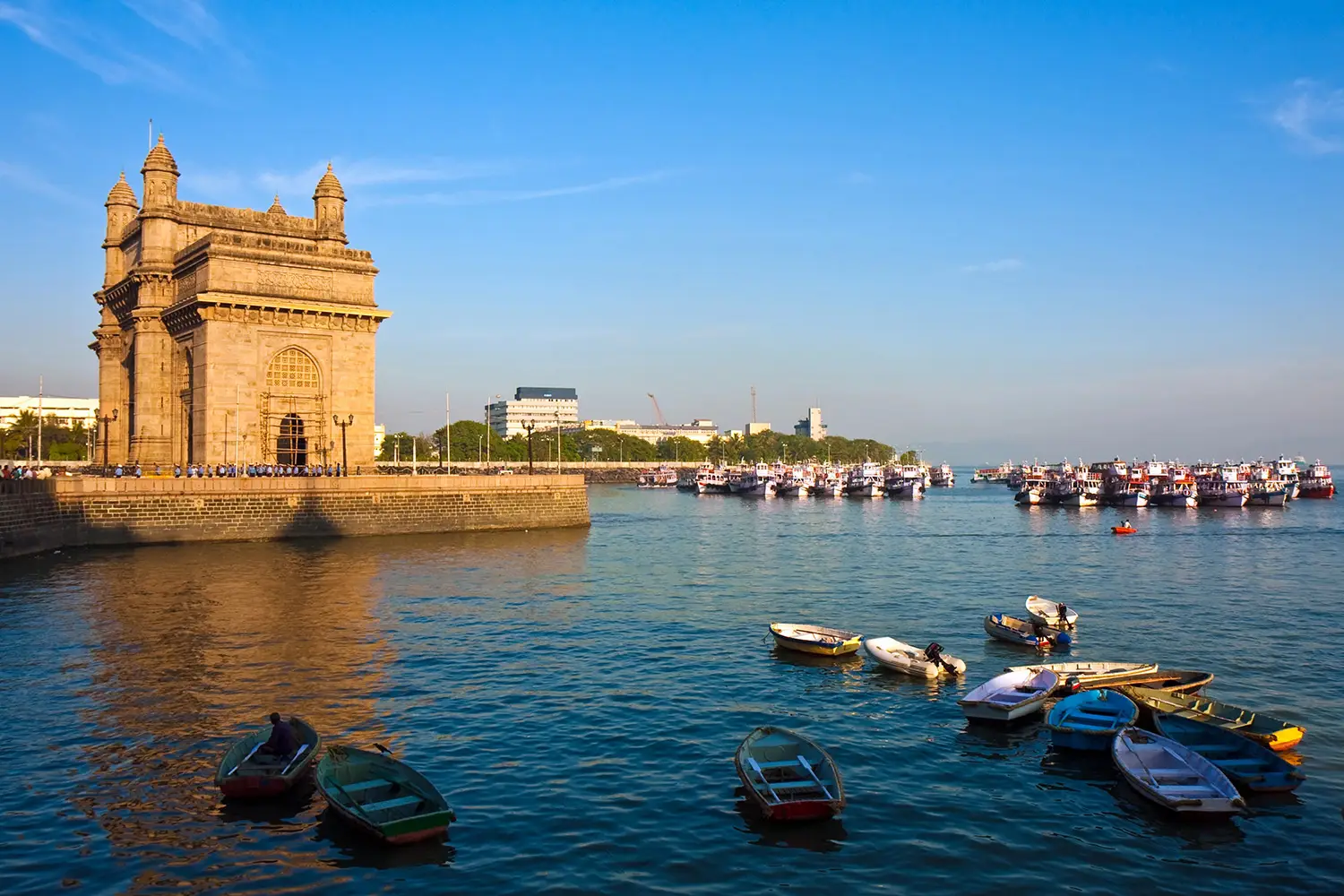
Later, you proceed to the city tour of Mumbai which includes a visit to the India Gate – a large ceremonial arch built to commemorate the visit of King George V; Mani Bhavan – a museum dedicated to the father of our nation Mahatma Gandhi, at the place where he resided for 15 years; the Marine promenade; the Prince of Wales Museum, considered one of the best museums in the country. The Hanging Gardens and Victoria Station (Chhatrapati Shivaji Terminus), which is one of the largest buildings in the city with its elaborate Italian Gothic design. Walk past Marine Drive and visit Juhu Chowpatty.
Return to the hotel.
Overnight stay at the hotel.
Breakfast at the hotel.
Transfer to airport to board flight for Goa.
Goa is India’s tropical paradise, known for its golden beaches, lush landscapes, and vibrant culture. North Goa offers lively beaches, markets, and nightlife, while South Goa is peaceful with pristine sands and luxury resorts. Its rich Indo-Portuguese heritage is visible in charming churches, cuisine, and architecture. Goa is perfect for relaxation, cultural exploration, and coastal leisure.
On arrival transfer to hotel. In the evening, enjoy a sunset at Beach.
Overnight stay at the hotel.
Start your day with a relaxing breakfast at the hotel, soaking in the tropical ambience of Goa.
Morning: Explore the historic charm of Old Goa, visiting its iconic churches — the Basilica of Bom Jesus, home to the mortal remains of St. Francis Xavier, and the grand Se Cathedral, one of the largest churches in Asia. Admire the Portuguese-influenced architecture, intricate altars, and serene surroundings that reflect Goa’s rich colonial past.
Afternoon: Embark on a visit to one of Goa’s famous spice plantations, nestled amidst lush greenery and gently rolling hills. As you walk through the plantation, the air is filled with the aromatic fragrance of cloves, cardamom, cinnamon, pepper, nutmeg, and other local spices, offering a feast for the senses. Knowledgeable guides will introduce you to the various plants, explaining their cultivation, traditional uses, and significance in Goan cuisine and culture. Following the plantation tour, enjoy a mild Goan buffet lunch set amidst the serene surroundings. Savor authentic regional dishes from coconut-based curries and fresh seafood specialties to locally prepared vegetarian options, all served in a tranquil, scenic environment that allows you to relax and immerse yourself in the flavors and heritage of Goa.
Optional Evening: As the day winds down, consider a Mandovi River sunset cruise — a serene and scenic way to experience Goa from the water. The cruise offers comfortable, senior-friendly seating, allowing you to relax and fully enjoy the gentle river breeze. Listen to live music as the boat glides along the tranquil waters, with the sun casting golden hues across the river and reflecting on the lush banks. This peaceful journey provides a perfect blend of natural beauty, calm ambiance, and leisurely sightseeing, making it an unforgettable Goan experience.
Return to the hotel for an overnight stay, resting up for the next day’s adventures.
Breakfast at hotel.
Transfer to airport to board flight for onward destination.